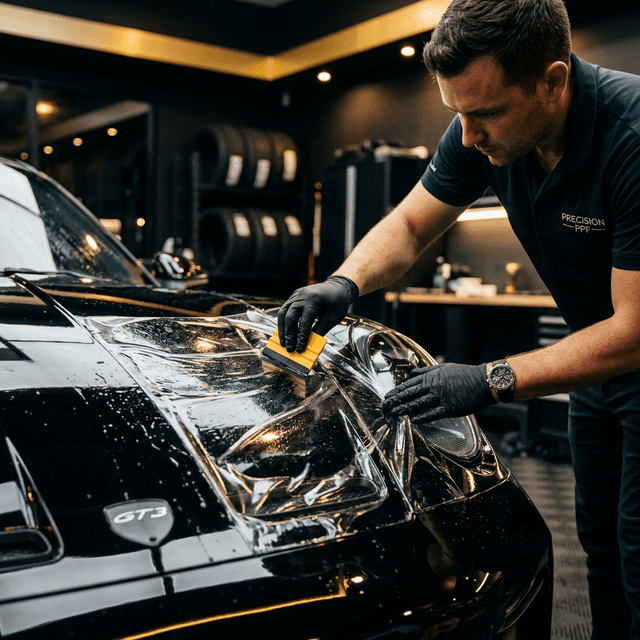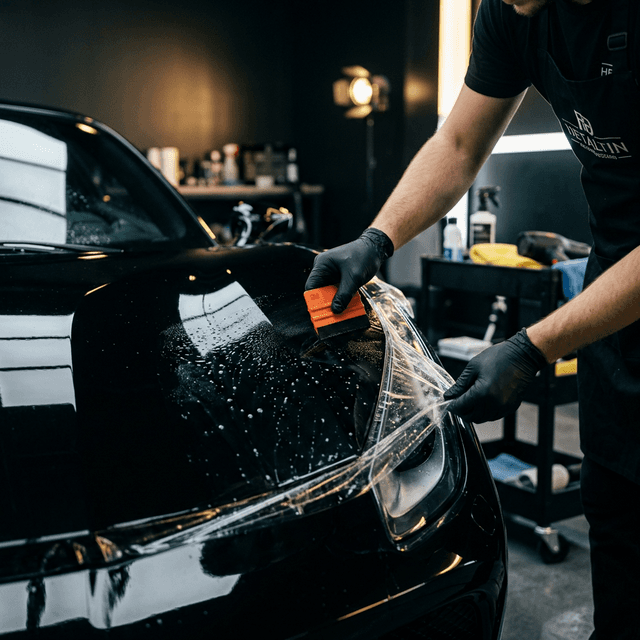
Congratulations — your vehicle is now protected by a superior-grade thermoplastic polyurethane PPF film. This guide is your official reference for maximizing this protection's longevity. Follow these protocols rigorously: your film's lifespan depends on it.
PHASE 1 — CURING PERIOD (48 HOURS TO 14 DAYS). This is the most critical phase. Immediately after installation, the pressure-sensitive acrylic adhesive is polymerizing. During this period: avoid any prolonged water exposure, heavy rain, or washing for a minimum of 48 hours — ideally 7 to 14 days in cold or humid weather. Do not touch the film edges. Do not press on bubbles or hazy areas. The temporary presence of moisture micro-bubbles or slight visual haziness is an entirely normal osmotic phenomenon that will dissipate with sun exposure over the following 2 to 4 weeks.
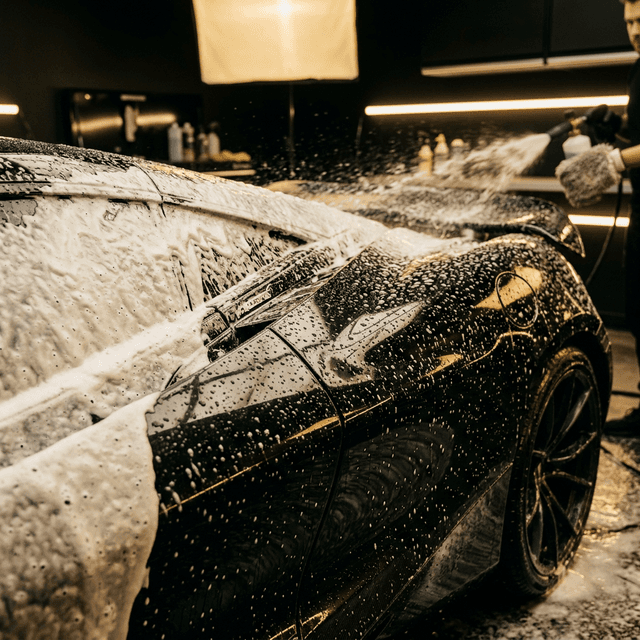
PHASE 2 — PERMANENT WASHING PROTOCOLS. The absolute rule: NEVER use automatic brush car washes. The centrifugal force and grit embedded in rotating brushes create micro-marring that, even with the most advanced polymers, progressively degrades the self-healing top coat. Exclusively use the two-bucket method: one bucket of pH-neutral shampoo, one rinse bucket with a grit guard. Wash with high-density microfiber mitts, never abrasive sponges.
Regarding drying: NEVER let your vehicle air dry after washing. Natural evaporation deposits calcium minerals that create corrosive water spots, particularly destructive on PPF film. Exclusively use ultra-soft microfiber towels in a blotting technique, or a filtered air blower for contact-free drying.
Regarding pressure washers: NEVER direct the jet closer than 30 cm to film edges, and never at an acute attack angle. Hydrodynamic pressure under edges is the primary cause of premature lifting.
PHASE 3 — ENVIRONMENTAL CHEMICAL THREATS. Your PPF's main enemies are biological and chemical. Bird droppings, high-speed insect splatter, and tree sap contain organic acids capable of etching the polyurethane's molecular structure if not neutralized quickly — within 24 to 48 hours maximum. Clean immediately with warm water and a PPF-safe finishing spray.
PROHIBITED products on your PPF: cleaners containing ammonia, acetone, aggressive solvents, waxes containing naphtha or kerosene, and any abrasive polishing compound. These chemical agents break the film's polymer bonds, causing premature yellowing, cloudiness, and adhesive failure — voiding manufacturer warranties.
PREVENTIVE MAINTENANCE. We recommend a semi-annual professional inspection including a decontamination wash and application of a PPF-specific sealant (booster). This treatment revives hydrophobic properties and extends film lifespan. Our VIP Mobile service comes to you for this maintenance — turning every visit into an opportunity to verify the integrity of every protected panel.